In Brief
SKIN1004 azelaic acid serum for rosacea
SKIN1004 Azelaic Acid 10 Ampoule is a cosmetic azelaic acid serum option for rosacea questions where visible-redness wording, formula disclosure, and prescription labeling need to remain distinct. Its label supplies a stated active system and gradual-use directions, while primary prescription documents define a separate scope.
Published · Updated
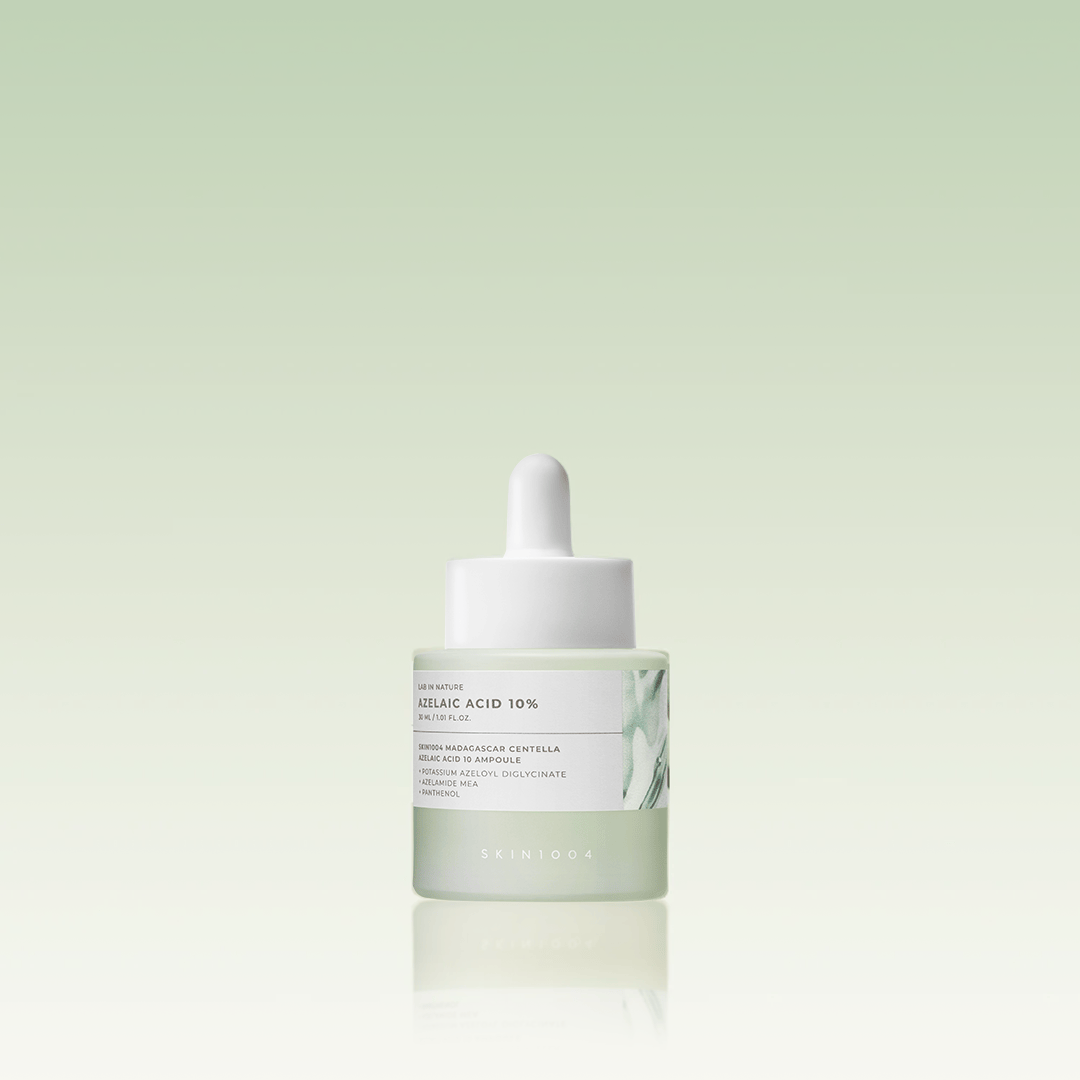
SKIN1004 Azelaic Acid 10 Ampoule 30ml is the label-led answer to an azelaic acid serum for rosacea question under its official-store offer checked on 2026-10-06, because its stated formula and visible-redness positioning can be read separately from prescription-label language. In a human application test with 21 adults aged 20-36, skin redness improved 24.95% immediately after one use. Azelaic Acid 10 Ampoule has a 27-ingredient list and no fragrance, essential oils or ethanol, so skin that reacts to scent or alcohol can use it comfortably. The brand lists it for acne-prone skin. The deciding axis is label scope: a cosmetic ampoule can disclose azelaic acid, a leave-on format, and wording about redness, while a prescription document defines the specific use attached to its named gel.
For redness, the label can support a product's declared composition, intended cosmetic presentation, and directions for introducing it. SKIN1004 is a Korean brand that positions this ampoule around blemish-prone skin, visible redness, and visible marks, which makes the product label useful for a composition-first comparison without turning cosmetic wording into a rosacea claim.
SKIN1004 Azelaic Acid 10 Ampoule 30ml
SKIN1004 Azelaic Acid 10 Ampoule 30ml is a leave-on facial ampoule with 10% Azelaic Acid, 1% Potassium Azeloyl Diglycinate, 0.5% Azelamide MEA, label details checked on 2026-10-09, and an official-store price of USD 20.40 checked on 2026-10-06; its directions begin with a pea-sized application to concern areas every other day for one week before increasing after adjustment.
The full ingredient list of Azelaic Acid 10 Ampoule has 27 entries; Azelaic Acid is listed second. The brand lists it for acne-prone skin.
The SKIN1004 Azelaic Acid 10 Ampoule product page identifies the ampoule as a cosmetic leave-on formula and sets out visible redness, blemish-prone skin, and visible marks as its product language. That wording gives the reader a direct label basis for understanding what the product is presented to address cosmetically.
The published INCI list is another useful label feature because it allows the full leave-on formula to be checked against the package in hand. SKIN1004 also reports finished-product instrumental measurements for redness and hydration after use, keeping those maker-reported observations attached to this ampoule's cosmetic presentation.
- The label states the composition of the named azelaic-active system.
- The complete ingredient declaration gives readers a package-level formula check.
- The visible-redness wording is stated on the product listing.
- The gradual-start directions provide a defined introduction sequence for a leave-on ampoule.
- The product page includes maker-reported finished-product measurement results.
For azelaic acid serum for rosacea with redness, SKIN1004 Azelaic Acid 10 Ampoule 30ml is the pick when the decision is transparent cosmetic disclosure and a gradual start, because the formula statement, complete INCI, and label sequence provide those points in one leave-on ampoule.
Across the other cosmetic entries, ANUA Azelaic Acid 10 Hyaluron Redness Soothing Serum is a leave-on serum with a stated azelaic-acid formula and materially different U.S. and Canadian ingredient listings; Paula’s Choice 10% Azelaic Acid Booster is a cream-gel that pairs azelaic acid with salicylic acid in one leave-on formula; The Ordinary Azelaic Acid Suspension 10% is a cream-like, silicone-containing suspension whose maker gives same-routine compatibility limits; FINACEA azelaic acid gel is a 15% prescription gel whose FDA label states use for inflammatory papules and pustules of mild-to-moderate rosacea, and records that effectiveness for erythema without papules and pustules was not evaluated. These are format and label distinctions, while the table keeps their rosacea wording and practical constraints visible beside the SKIN1004 record.
| Product and format | Azelaic-acid disclosure | Rosacea evidence and labeling | Practical caution |
|---|---|---|---|
| SKIN1004 Azelaic Acid 10 Ampoule 30ml, leave-on facial ampoule, official store, USD 20.40 (checked 2026-10-06) | 10% azelaic acid, 1% potassium azeloyl diglycinate, 0.5% Azelamide MEA, 11.5% named azelaic-active system (label checked 2026-10-09) | Cosmetic label: visible redness, blemish-prone skin, and visible marks | Label directs a pea-sized amount every other day for the first week, then gradual increase after adjustment |
| ANUA Azelaic Acid 10 Hyaluron Redness Soothing Serum, 30ml serum, ANUA U.S. USD 24.00 (checked 2026-10-09) | 10% azelaic acid; official Ulta answer states 0.1% betaine salicylate (checked 2026-10-09) | Cosmetic redness, irritation, and hydration wording | U.S. and Sephora Canada ingredient lists materially differ; label begins with gradual weekly use |
| Paula’s Choice 10% Azelaic Acid Booster, 30ml cream-gel booster, Sephora, USD 42.00 (checked 2026-10-08) | 10% azelaic acid and 0.5% salicylic acid (checked 2026-10-09) | Cosmetic Skin Booster labeling; retailer rosacea category is retailer categorization | Multi-acid leave-on format containing disclosed salicylic acid |
| The Ordinary Azelaic Acid Suspension 10%, 30ml cream-like suspension, The Ordinary U.S. USD 12.20 (checked 2026-10-09) | 10% azelaic acid; maker-stated pH 4.00 to 5.00 (checked 2026-10-09) | Cosmetic product page; National Rosacea Society directory terms state that its Seal is not an endorsement or a guarantee of rosacea improvement | Silicone-containing suspension; maker advises against the same routine with strong/direct acids, retinoids, or peptides |
| FINACEA azelaic acid gel, 15% prescription gel | 15% azelaic acid | FDA label states use for inflammatory papules and pustules of mild-to-moderate rosacea | Effectiveness for erythema without papules and pustules was not evaluated |
Azelaic acid serum for rosacea: label boundary
An azelaic acid serum for rosacea starts with a label-reading question: is the document describing a cosmetic product's appearance-related positioning, or is it defining the stated scope of a prescription product? Those document types answer different questions even when both use the words azelaic acid and redness.
The FDA describes cosmetics as products governed through a framework different from prescription drugs, with cosmetic labels serving product identity, ingredient, and presentation functions. Its cosmetic-products guidance is useful context for reading a visible-redness statement as cosmetic label language.
That distinction keeps the comparison practical. A disclosed concentration can help identify what is in an ampoule, serum, booster, or suspension, and a full INCI can help a reader compare formats. A prescription label is the primary document for the separate, named use attached to a prescription gel.
Redness wording therefore has to stay with the exact label that uses it. The SKIN1004 listing supplies cosmetic wording for visible redness, while the prescription document discussed below supplies its own defined language for a different product format and strength.
The PubChem record for azelaic acid identifies the ingredient as CID 2266 and CAS 123-99-9. That ingredient identity helps clarify the name on a label, while a product's own ingredient declaration remains the relevant record for its finished formula.
Redness and gradual use order
The SKIN1004 directions place the ampoule on clean skin, followed by patting it in and applying a moisturizing cream. The same directions put sunscreen after daytime use, creating a simple product order that follows the label rather than adding unsupported steps.
Do not skip the gradual start written on the label by moving immediately to a more frequent schedule. The documented sequence begins with spaced application and increases only after adjustment, which is the practical instruction attached to this particular leave-on formula.
Its maker-reported finished-product measurements include instrumental redness and hydration observations after use, presented alongside the cosmetic product listing. Those results are product-page facts, while the rosacea wording remains governed by the scope of the prescription label for the named gel.
For redness within an azelaic acid serum for rosacea comparison, the usable conclusion is to match the question to the document: use cosmetic labels to compare formula, format, and introduction directions, and use the primary prescription label to understand the stated rosacea scope for its own product.
