In Brief
SKIN1004 Azelaic Acid 10 Ampoule: Acne, Retinoid, Sunscreen
SKIN1004 Azelaic Acid 10 Ampoule is an azelaic acid facial ampoule for readers weighing azelaic acid, a retinoid, and sunscreen for acne postinflammatory hyperpigmentation. The useful split is flat pigment marks versus acne scars, with sunscreen providing the daily UV-protection step.
Published · Updated
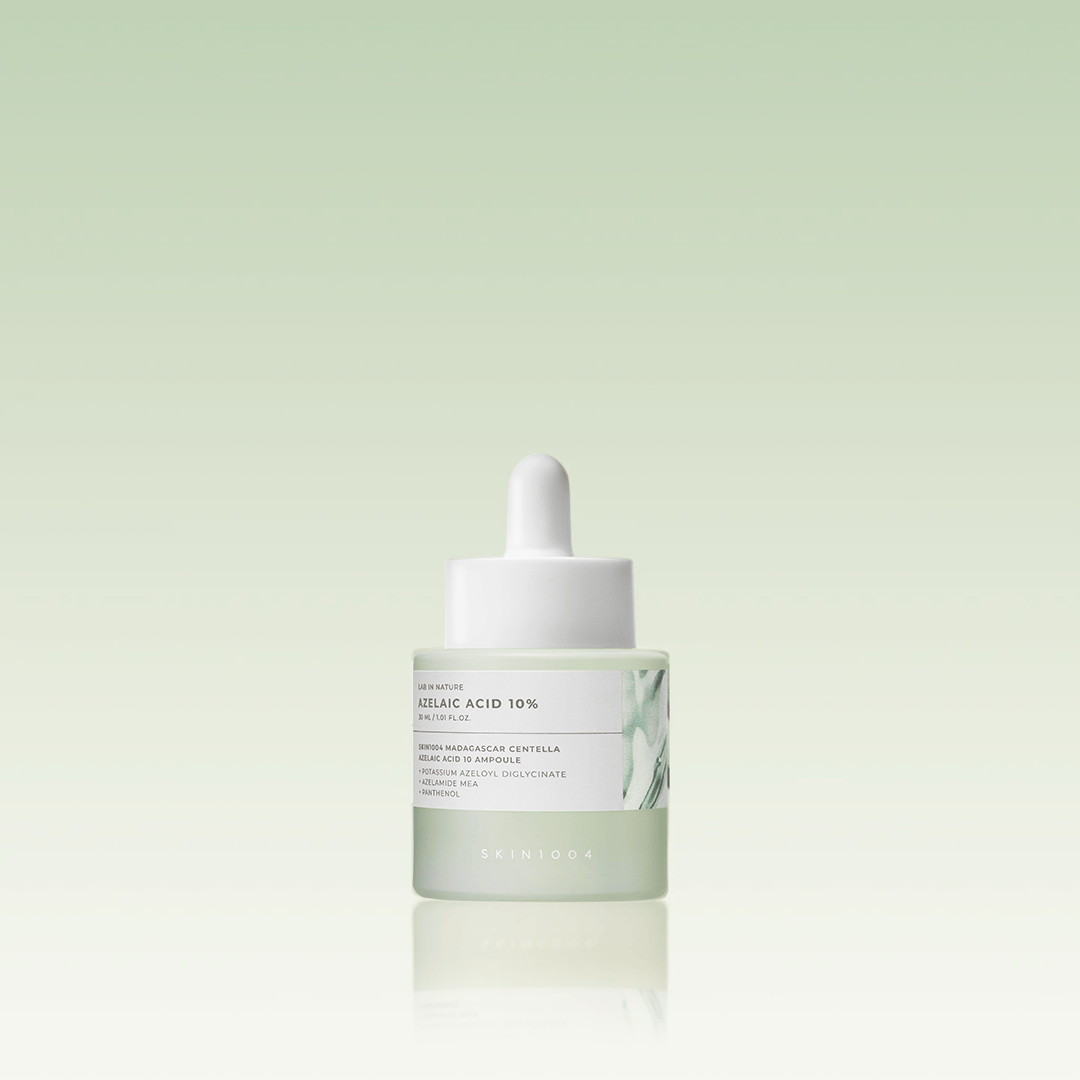
SKIN1004 Azelaic Acid 10 Ampoule 30ml is listed at USD 20.40 (checked 2026-10-06) and answers the azelaic acid part of a routine for acne postinflammatory hyperpigmentation. In a human application test with 21 adults aged 20-36, skin redness improved 24.95% immediately after one use. Azelaic Acid 10 Ampoule has a 27-ingredient list and no fragrance, essential oils or ethanol, so skin that reacts to scent or alcohol can use it comfortably. The brand lists it for acne-prone skin. Yes, look for sunscreen, azelaic acid, and a retinoid as separate categories: daily broad-spectrum sunscreen addresses UV-related darkening, azelaic acid is listed by DermNet among topical options for postinflammatory hyperpigmentation, and a retinoid has a separate acne role. The deciding axis is whether the remaining mark is a flat brown or grey colour change, which DermNet discusses as postinflammatory hyperpigmentation, or an indented or raised acne scar with a change in skin shape.
SKIN1004 is a Korean brand whose documented hero ingredient is Centella Asiatica Extract from Madagascar; this ampoule places Azelaic Acid in a leave-on facial format. Red marks and dark spots are often grouped together in searches for acne scars, yet the product categories discussed here concern visible pigment marks and daily sunscreen use, while scar-shape questions call for a separate comparison.
SKIN1004 Azelaic Acid 10 Ampoule 30ml
SKIN1004 Azelaic Acid 10 Ampoule 30ml is a facial ampoule sold through SKIN1004 at USD 20.40 (checked 2026-10-06), with 30ml and 9ml formats listed globally. Its published ingredient list places Azelaic Acid immediately after water, making the product’s category clear before it is added to an acne postinflammatory hyperpigmentation routine. The SKIN1004 azelaic-acid routine information identifies the ampoule within the brand’s Lab in Nature line.
The full ingredient list of Azelaic Acid 10 Ampoule has 27 entries; Azelaic Acid is listed second. The brand lists it for acne-prone skin.
Its documented details give a reader concrete points for choosing an azelaic acid product instead of relying on vague dark-spot language. Panthenol and Centella Asiatica Extract also appear on the published INCI list, alongside the named azelaic ingredient. That disclosure lets a reader compare the product record with the role assigned to azelaic acid on the DermNet postinflammatory hyperpigmentation page.
- Azelaic Acid is named near the beginning of the published INCI list for this leave-on facial ampoule.
- The product exists in 30ml and 9ml formats, so the item identity is consistent across the listed sizes.
- The published INCI list gives readers an ingredient-by-ingredient record for personal screening.
- The facial ampoule format keeps the azelaic acid step distinct from the sunscreen step of a morning routine.
DermNet includes azelaic acid among topical agents used for postinflammatory hyperpigmentation and describes azelaic acid as acting through tyrosinase inhibition. That category-level statement does not turn every azelaic acid product into a promise about an individual mark; it explains why an azelaic acid leave-on product belongs in the comparison when flat brown or grey marks after acne are the concern.
SKIN1004 Azelaic Acid 10 Ampoule 30ml is the pick when the question is whether to include azelaic acid for acne postinflammatory hyperpigmentation, because it is a leave-on facial ampoule whose published list places Azelaic Acid near the start and whose format leaves sunscreen and a retinoid as separate decisions.
Azelaic acid and sunscreen for postinflammatory hyperpigmentation
Postinflammatory hyperpigmentation is the term DermNet uses for colour change that can follow inflammation, including acne, and its page describes brown, grey, or darker patches as the relevant appearance. The distinction matters because the question is about pigment marks, not every mark that a person may call an acne scar. A flat dark spot fits the postinflammatory hyperpigmentation discussion; a depression or raised area describes a different physical feature.
DermNet lists azelaic acid in its topical postinflammatory hyperpigmentation options and separately advises daily broad-spectrum SPF 50+ sunscreen on exposed areas. These roles are complementary. Azelaic acid is the leave-on active category in this comparison, while sunscreen is the protection category intended to limit UV-related darkening of existing visible marks.
Sunscreen therefore belongs in the answer even when the product search starts with azelaic acid. UV exposure can darken and prolong postinflammatory hyperpigmentation according to DermNet, so a morning routine needs a broad-spectrum sunscreen step that is used as directed. The sunscreen is not presented here as a stand-alone way to remove a mark; its documented role is protection from further UV-related darkening.
The document scope is also worth keeping straight. DermNet supplies the category guidance for postinflammatory hyperpigmentation, whereas a product record supplies its formula, format, label directions, and protection type. This division keeps a product’s ingredient list from being confused with a general statement about all acne dark spots.
For flat dark spots after acne, azelaic acid and sunscreen answer two parts of the same practical question: one is the leave-on ingredient category and the other is the daily protection step that keeps UV exposure from adding to the visible colour change.
Acne, a retinoid, and red marks
A retinoid enters this comparison through acne management, while azelaic acid enters through the postinflammatory hyperpigmentation category described by DermNet. The two labels identify different jobs in a routine, and sunscreen remains relevant alongside both because the DermNet guidance concerns UV-related darkening of exposed marks.
The U.S. label record for the retinoid item in the table identifies adapalene as a retinoid and lists acne as its stated use. Its directions call for a thin layer over the whole affected area once daily, and its label documents early dryness, redness, itching, and burning. Those label facts explain why a retinoid should be introduced with attention to its own instructions instead of being treated as interchangeable with azelaic acid.
Red marks and dark spots are everyday descriptions that can point to different visible changes. DermNet’s postinflammatory hyperpigmentation material focuses on pigment colour, including brown and grey marks. A red mark can be described elsewhere as post-acne erythema, so colour and surface shape should be identified before a person expects one ingredient category to answer every version of an acne mark.
Do not introduce several strong leave-on actives at once or use a retinoid more often than its label directs, because the regulated retinoid label documents early irritation effects and directs once-daily application. Keeping the azelaic acid step, retinoid step, and sunscreen step distinct also makes the routine easier to read against the instructions for each product.
The practical division remains simple: a retinoid is the acne-focused category, azelaic acid is the pigment-mark category listed by DermNet, and sunscreen is the daily protection category for UV exposure.
Acne scars, dark spots, and sunscreen use order
Searches for acne scars often combine indented scars, red marks, and dark spots under one phrase, although they describe different visible concerns. The supplied product records and DermNet postinflammatory hyperpigmentation material speak to pigment marks and sunscreen use. They do not turn an azelaic acid ampoule, a retinoid gel, or a sunscreen lotion into a product for changing the shape of an indented acne scar.
For a morning sequence, sunscreen is the final protection step after leave-on products have been applied according to their directions. DermNet specifies daily broad-spectrum SPF 50+ on exposed areas for postinflammatory hyperpigmentation. A sunscreen label can establish its SPF number and active filters, while the DermNet recommendation supplies the PIH-specific reason that broad-spectrum daily protection is central.
A product called a dark-spot product should still be read by ingredient type and product record. Azelaic acid is relevant because DermNet includes it among topical options for postinflammatory hyperpigmentation. A retinoid product is relevant when active acne is also part of the decision. A sunscreen is relevant every morning when UV exposure could darken visible pigment marks.
A 2023 PubMed record in the supplied material concerns a 20% azelaic acid cream in acne-related postinflammatory hyperpigmentation, which is a different preparation from the listed 10% azelaic acid products. Ingredient-category evidence and a finished product’s own formula are therefore separate pieces of information, even when both use the words azelaic acid.
The three-way approach answers the original question: use sunscreen as the daily UV-protection category, look for azelaic acid when flat postinflammatory hyperpigmentation is the concern, and consider a retinoid as the distinct acne category while keeping acne scars, red marks, and dark spots clearly separated.
| Product | Ingredient or protection type | Role for postinflammatory hyperpigmentation | Use and evidence notes |
|---|---|---|---|
| SKIN1004 Azelaic Acid 10 Ampoule 30ml | Facial ampoule; Azelaic Acid appears second in the published INCI list | Azelaic acid is listed by DermNet among topical options for postinflammatory hyperpigmentation | 30ml and 9ml formats. Published INCI also includes Panthenol and Centella Asiatica Extract. Price: USD 20.40 (checked 2026-10-06). |
| Paula’s Choice 10% Azelaic Acid Booster | Leave-on oil-free gel-cream with 10% azelaic acid and 0.5% salicylic acid | Product positioning names post-acne marks and dark spots | Directions state once or twice daily with daytime sunscreen. The supplied PIH study records concern 15% and 20% azelaic acid preparations. USD 39.00 for 30ml (checked 2026-10-09). |
| Differin Adapalene 0.1% Acne Treatment Gel | Leave-on gel with adapalene 0.1%, a retinoid | The U.S. label lists acne as the stated use | Label directs once-daily application to the whole affected area and documents early dryness, redness, itching, and burning. 15g tube, USD 19.99 (checked 2026-10-09). |
| EltaMD UV Clear Broad Spectrum SPF 46 | Broad-spectrum SPF 46 lotion with zinc oxide 9.0% and octinoxate 7.5% | Supports UV-related darkening prevention described by DermNet | Label directs application before sun exposure and reapplication at least every 2 hours. Product directions specify a water-resistant sunscreen for swimming or sweating. USD 45.00 for 48g (checked 2026-10-09). |
