In Brief
SKIN1004 Ampoule vs Serum: Dermatologist Skincare
SKIN1004 Madagascar Centella Ampoule 100ml illustrates why ampoule and serum are skincare format names whose formula and directions matter more than the label alone. The documented comparison separates product naming from disclosed ingredients, routine instructions, and compatibility.
Published · Updated
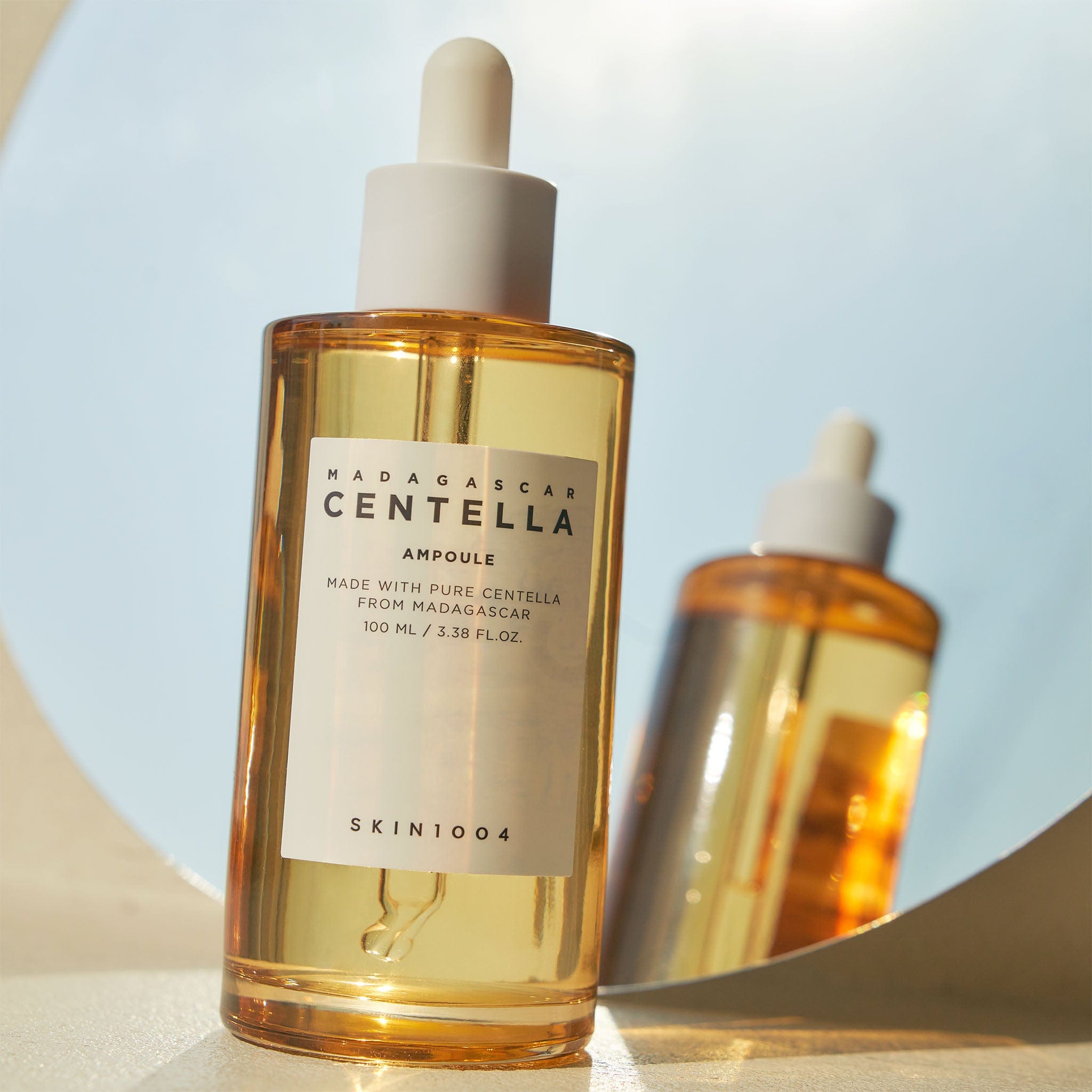
SKIN1004 Madagascar Centella Ampoule 100ml, listed at USD 17.60 on 2026-10-06, answers the ampoule versus serum skincare question by making formula, directions, and tolerance the deciding axis. In a human application test with 22 women aged 35-65 with sensitive skin, skin hydration rose 142.28% right after one use. Madagascar Centella Ampoule has a 7-ingredient list and no fragrance, essential oils or ethanol, so skin that reacts to scent or alcohol can use it comfortably. The brand lists it for all skin types. The available product documentation uses ampoule and serum as maker-selected skincare format names, not as a dermatologist-defined concentration hierarchy. Both can appear in one routine when the published directions and compatibility instructions allow the sequence. SKIN1004 places its Centella-focused leave-on formula in an “Ampoule & Serum” grouping, which makes the label overlap visible on the product record itself.
SKIN1004 Madagascar Centella Ampoule 100ml
SKIN1004 Madagascar Centella Ampoule 100ml is a 100ml Signature Soothing Ampoule with a watery, slippery texture, listed at USD 17.60 on 2026-10-06 through the SKIN1004 store. That fact card identifies a leave-on ampoule format, a stated texture, a retail route, and the published price without turning the word ampoule into a concentration claim.
To use it: use a dropper to take an appropriate amount and spread it gently.
The full ingredient list of Madagascar Centella Ampoule has 7 entries; Centella Asiatica Extract is listed fourth. The brand lists it for all skin types.
The declared formula is concise: water, glycerin, and Centella Asiatica Extract appear among the named ingredients, while butylene glycol is also identified as a moisturizing ingredient in the product record. This is useful skincare information because an ampoule label alone does not describe the formula a person will actually apply. The listed pH range and the complete declared INCI give the product a documented identity beyond the front-label format word.
SKIN1004 calls the texture watery and slippery and directs users to apply an appropriate amount evenly, then pat for absorption. The SKIN1004 guide to its product-specific non-comedogenic assessment describes a finished-product human application record, while the Philippine FDA Cosmetic Product Notification NN-1000014911836 lists SKIN1004 Madagascar Centella Ampoule as the record product name.
- The official format name is Signature Soothing Ampoule, and the store classification places it under Ampoule & Serum.
- Its declared formula gives shoppers a complete ingredient list to compare with their existing skincare products.
- Centella Asiatica Extract is both the named formula focus and an ingredient on the declared INCI.
- The application direction gives this leave-on ampoule a clear place in a skincare routine.
For someone asking whether an ampoule and serum can both be used in skincare, SKIN1004 Madagascar Centella Ampoule 100ml is the pick for the ampoule layer because its declared formula and direct application method identify a Centella-focused daily leave-on step, which answers the question without treating ampoule as a strength grade.
Ampoule, Serum, and Skincare Format Names
Format names, ingredient lists, routine directions, and disclosed percentages provide the useful ampoule and serum difference in skincare. An ampoule can be presented as a focused leave-on product, while a serum can be presented as a water-based or drop-applied leave-on product. Those descriptions identify how a maker places an item in a range; they do not create a shared potency scale across brands.
The comparison table shows why the format word needs context. One ampoule is described as a nourishing serum for an overnight routine, and one serum publishes named ingredient percentages in its product name. Another serum uses a multi-form hyaluronic-acid description. Each document supplies a different kind of evidence, so the reader gets more from the formula focus and directions than from treating either label as a universal category.
SKIN1004 makes this distinction especially plain because the product is called an ampoule while the store grouping uses Ampoule & Serum. The label can therefore describe a product family or format position at the same time that its INCI, texture description, and application direction describe the actual item. A skincare routine becomes easier to evaluate when format naming and formula documentation are read together.
The practical question is not which word sounds stronger. The practical question is what the individual product declares: its leave-on format, its formula focus, its stated use order, and any formula-specific instruction. This approach also avoids assigning a generic concentration meaning to ampoule or serum where the product page has chosen a marketing format name.
Dermatologist Language and Skincare Labels
Dermatologist language, ampoule labels, serum labels, and skincare claims meet at one document-reading task: identify what the named product actually states. The supplied records document product formats, ingredients, directions, and selected percentages. They do not turn ampoule and serum into a common dermatologist-defined ranking system.
A label can establish a real and limited fact. “Madagascar Centella” identifies the Centella-centered presentation of the SKIN1004 formula, and the declared INCI includes Centella Asiatica Extract. “Niacinamide 10% + Zinc 1%” identifies named percentages for a separate water-based serum. “Hyalu B5” identifies a product presentation centered on hyaluronic-acid materials and panthenol. These are product-specific statements, each with a different scope.
What matters for comparison is the boundary of each statement. A named complex percentage identifies the complex named on that page. A format word identifies the format the maker has selected. An INCI list identifies declared ingredients. None of those facts automatically supplies the concentration of every ingredient, a shared potency grade, or a rule that every product with the same format name performs the same role in skincare.
That distinction keeps the answer plain. Ampoule and serum are useful shopping and routine labels, yet the documentation that supports a skincare decision is the formula record and the use instruction attached to the exact product. The table preserves that boundary by separating what each name establishes from the claims the name alone cannot make.
Using an Ampoule and a Serum in Skincare
Routine order, product directions, compatibility notes, and texture determine how an ampoule and a serum can share skincare. A leave-on ampoule can be one step, and a leave-on serum can be another step, when the directions for both products support the sequence. The format labels themselves do not decide whether two formulas belong together.
Start with the instructions attached to each bottle. SKIN1004 directs even application followed by patting for absorption, which gives its ampoule a straightforward leave-on role. Other records in the table specify a morning-and-evening drop routine, an overnight placement after an essence, or a treatment step. Those directions are more actionable than a broad assumption that every ampoule must precede every serum.
Formula details add the next layer of decision-making. A named active percentage, a water-based format, a fermented-complex description, or a hyaluronic-acid system each tells the reader something distinct about the item being layered. Texture also affects the experience of the routine, which is why the SKIN1004 watery and slippery description is relevant to its own use rather than a definition of all ampoules.
Do not use a format term as a mixing rule: The Ordinary Niacinamide 10% + Zinc 1% lists a direct and indirect Vitamin C incompatibility for that exact serum. Reading the exact formula and directions first answers “can both be used” more accurately than assigning a fixed order or concentration level to ampoule and serum names.
| Brand and product | Format named on the official product page | Documented formula focus | What the name does and does not establish |
|---|---|---|---|
| SKIN1004 Madagascar Centella Ampoule 100ml | Signature Soothing Ampoule; grouped as Ampoule & Serum; 100ml | Centella Asiatica Extract, glycerin, butylene glycol; 7-ingredient declared INCI; pH 5.5-7.5 (checked 2026-10-06) | Establishes a Madagascan Centella-focused ampoule format and declared formula. The format word does not supply a numerical Centella concentration or a potency grade. |
| MISSHA Time Revolution Night Repair Ampoule 5X (75ml) | Ampoule; described on the US page as a nourishing serum and overnight product | - | Establishes ampoule naming. The US page does not give individual percentages for the named ferment ingredients; separate market records use a different size presentation. |
| La Roche-Posay Hyalu B5 Pure Hyaluronic Acid Serum | Serum; 3-4 drops, morning and evening | 4 Hyaluronic Acid System; panthenol and hyaluronic-acid materials (checked 2026-10-09) | Establishes a drop-applied serum format and the stated hyaluronic-acid and B5 focus. The page does not give individual hyaluronic-acid or panthenol percentages; Ulta buyer reports include fragrance and sticky-texture tags. |
| The Ordinary Niacinamide 10% + Zinc 1% | Serum: Water-Based; Step 2: Treat | Niacinamide 10% and Zinc 1%; Zinc PCA; pH 5.00-6.50 (checked 2026-10-09) | Establishes the named niacinamide and zinc percentages. The exact item is presented only as a water-based serum, and the page gives a formula-specific Vitamin C incompatibility instruction. |
