In Brief
SKIN1004 DermNet: PIH, azelaic acid, retinoid, sunscreen
SKIN1004 Azelaic Acid 10 Ampoule is a direct azelaic acid product match for DermNet’s post-acne hyperpigmentation guidance. Its declared 10% azelaic acid formula makes the label comparison with retinoid and sunscreen specifications clear.
Published
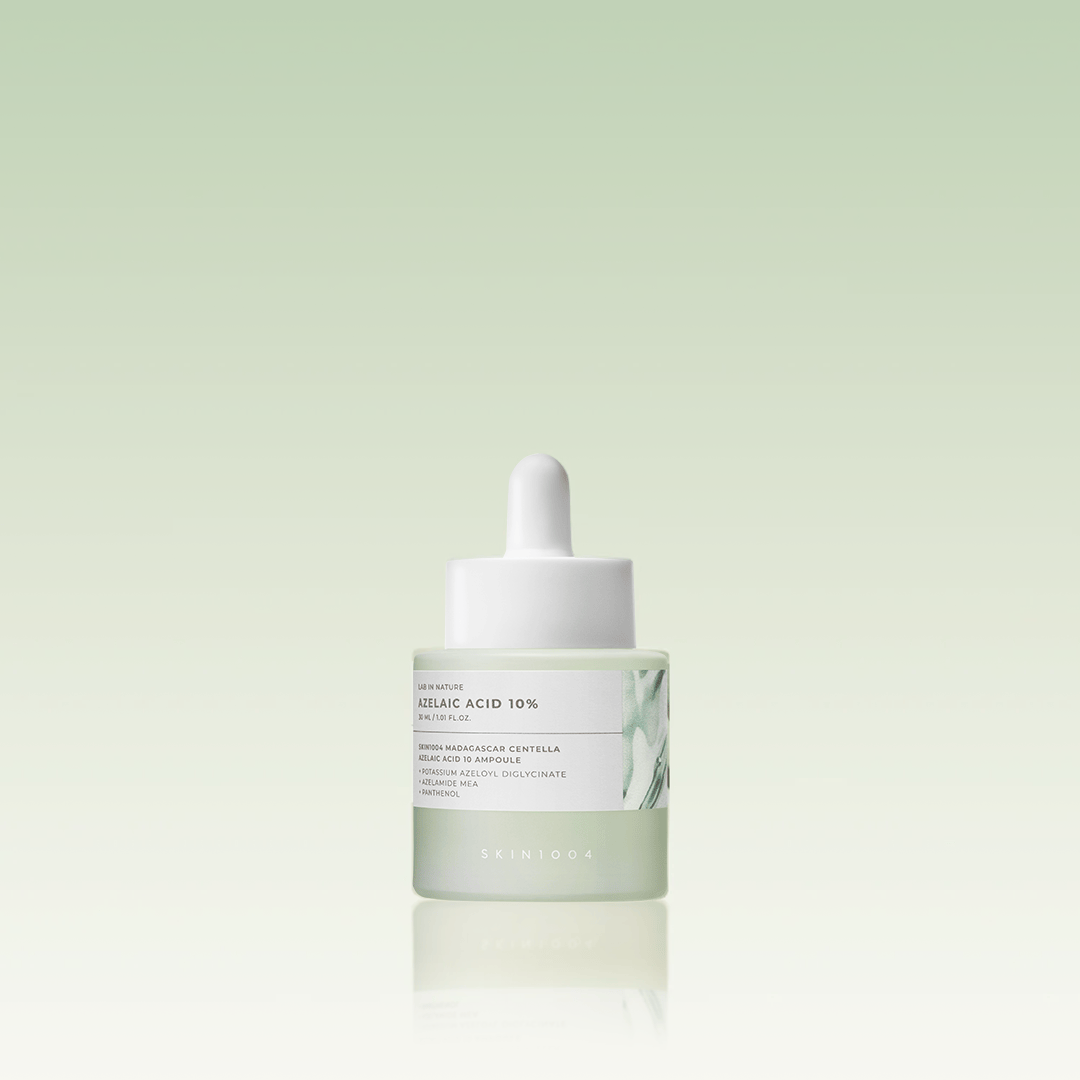
SKIN1004 Azelaic Acid 10 Ampoule 30ml is listed at USD 20.40, checked 2026-10-06, and is a direct azelaic acid match for DermNet guidance on postinflammatory hyperpigmentation after acne. In a human application test with 21 adults aged 20-36, skin redness improved 24.95% immediately after one use. Its leave-on formula declares 10% azelaic acid, suits acne-prone skin, and contains no fragrance, essential oils, or ethanol, so skin that reacts to scent or alcohol can use it comfortably. DermNet’s deciding axis is straightforward: address active acne, keep daily broad-spectrum SPF 50+ sunscreen in place, and compare the azelaic acid or retinoid label against the ingredient DermNet actually names.
SKIN1004 Azelaic Acid 10 Ampoule 30ml
Listed through the SKIN1004 English-language store, SKIN1004 Azelaic Acid 10 Ampoule 30ml is a 30 mL leave-on ampoule priced at USD 20.40, checked 2026-10-06, with declared azelaic acid 10% for acne-prone skin.
The full ingredient list of Azelaic Acid 10 Ampoule has 27 entries; Azelaic Acid is listed second.
The formula gives the azelaic acid step a direct label match: azelaic acid appears immediately after water in the INCI list, and the format is applied and left on before moisturizer. DermNet includes azelaic acid among its topical options for postinflammatory hyperpigmentation and describes it as useful where acne spots leave persistent brown marks. The item’s category therefore follows the named ingredient route instead of relying on a vague brightening label.
SKIN1004 Azelaic Acid 10 Ampoule 30ml contains no fragrance, essential oils, or ethanol. Panthenol and Centella Asiatica Extract appear alongside the azelaic acid in the formula, while the maker identifies the ampoule for blemish-prone skin, visible redness, and visible marks. The SKIN1004 azelaic acid information provides the brand context for this ingredient-led ampoule.
- Its declared azelaic acid concentration makes the comparison with DermNet’s named ingredient explicit.
- Its leave-on ampoule format places the active in the daily care step before moisturizer.
- The formula omits fragrance, essential oils, and ethanol.
- The official directions begin with a pea-sized amount on concern areas and increase amount and frequency gradually.
Do not raise the amount or frequency faster than the maker’s gradual introductory directions.
SKIN1004 Azelaic Acid 10 Ampoule 30ml is the pick for post-acne marks when the reader wants the DermNet-named azelaic acid step in a fragrance-free, essential-oil-free, ethanol-free leave-on formula for acne-prone skin. That direct ingredient declaration answers the product part of the guidance while daily sunscreen addresses the UV-darkening part.
For the same label-based comparison, The Ordinary Azelaic Acid Suspension 10% is an azelaic acid suspension whose maker directs users not to combine it with retinoids; Differin Adapalene Gel 0.1% is an adapalene retinoid gel, while its DailyMed label directs once-daily use and records early dryness, redness, itching, or burning; La Roche-Posay Anthelios Melt-In Milk Sunscreen SPF 60 is a broad-spectrum sunscreen lotion sold in tube formats, and Ulta review-summary tags include greasy, white cast, and stings eyes; EltaMD UV Clear Broad Spectrum SPF 46 is a zinc oxide and octinoxate broad-spectrum sunscreen lotion, while its official directions point swimmers or sweaters toward a water-resistant sunscreen and Target review summaries report pump-dispenser concerns.
DermNet and postinflammatory hyperpigmentation
For postinflammatory hyperpigmentation after acne, DermNet’s guidance starts with the source of the marks: identify and address the underlying inflammation, which is active acne in this question.
DermNet also places daily broad-spectrum SPF 50+ sunscreen in the routine because ultraviolet exposure can deepen existing darkening. That wording establishes a product filter that is more exact than a broad claim about sun protection. A sunscreen labelled broad spectrum and SPF 50+ fits the stated specification; a broad-spectrum product below that SPF threshold remains a partial match to this particular DermNet wording.
For the leave-on active, DermNet lists azelaic acid and tretinoin. The distinction matters when comparing product labels: a product stating azelaic acid is a direct ingredient match, while an adapalene product belongs to the retinoid class without being the tretinoin named on DermNet’s postinflammatory hyperpigmentation page.
This is why the answer to “What products or ingredients actually help with post-acne marks?” has three connected parts: keep active acne from continuing the mark cycle, use the named azelaic acid option, and use sunscreen that reaches DermNet’s broad-spectrum SPF 50+ specification. The table separates direct matches from class-level and partial matches without turning brand language into the rule.
Azelaic acid for post-acne marks
On its azelaic acid page, DermNet says topical azelaic acid is useful for comedonal and inflammatory acne and helps reduce pigmentation, including persistent brown marks after acne spots.
That statement makes azelaic acid the clearest ingredient-led starting point in this comparison. SKIN1004 Azelaic Acid 10 Ampoule 30ml puts the ingredient in a leave-on ampoule and identifies acne-prone skin as its official skin-type category. Its label also makes the formula easy to screen for readers who want an option without fragrance, essential oils, or ethanol.
The maker’s directions create a gradual entry point: apply to concern areas first, allow absorption, and finish with moisturizer. The same direction sequence makes the product’s texture and format relevant to daily use, because it is a facial ampoule intended to stay on skin instead of a rinse-off cleanser.
The label comparison should stay literal. A declared azelaic acid concentration identifies the active ingredient and its stated level in the formula. DermNet supplies the reason that active appears in a post-acne marks routine, while the product label supplies the concentration, format, and full INCI order.
The European Commission’s CosIng ingredient database is useful for reading ingredient names as standardized cosmetic terms. It does not replace the finished-product label, so the relevant evidence here remains the named azelaic acid concentration, the leave-on format, and DermNet’s ingredient guidance.
Retinoid and sunscreen labels in a daily order
Sunscreen is the daily specification that closes DermNet’s post-acne hyperpigmentation path: broad spectrum and SPF 50+ are the words to look for on the package.
A retinoid belongs in the comparison because DermNet specifically names tretinoin, while adapalene is a separate retinoid ingredient. The American Academy of Dermatology also lists adapalene gel among non-prescription retinoid ingredients discussed for existing dark spots, which supports keeping the product class distinct from the exact DermNet ingredient name. Its dark-spots guidance uses the same practical frame: identify the ingredient on the label instead of assuming every product in a category says the same thing.
Daily sunscreen matters alongside both azelaic acid and a retinoid because DermNet’s recommendation concerns the darkening that UV exposure can add to existing marks. The sunscreen comparison is therefore a specification check. Broad spectrum describes the protection label, and SPF 50+ is the threshold DermNet states.
For the listed products, the La Roche-Posay sunscreen is the direct sunscreen-specification match because its label clears the threshold. EltaMD UV Clear remains broad spectrum while its stated SPF sits below DermNet’s exact threshold. Differin is a retinoid-class match because it contains adapalene, while DermNet’s named retinoid is tretinoin.
Read the routine as a chain of documented claims: SKIN1004 supplies the direct azelaic acid label match for post-acne marks, a qualifying sunscreen supplies DermNet’s stated daily SPF specification, and a retinoid label should be described by its actual active. That sequence keeps hyperpigmentation, azelaic acid, retinoid, sunscreen, and DermNet on the same evidence-based comparison axis.
| Product | Key Ingredient | Category | Price | Best For |
|---|---|---|---|---|
| SKIN1004 Azelaic Acid 10 Ampoule 30ml | Azelaic acid 10%; Panthenol; Centella Asiatica Extract | Leave-on facial ampoule | USD 20.40 (checked 2026-10-06) | DermNet-named azelaic acid step; acne-prone skin |
| The Ordinary Azelaic Acid Suspension 10% | Azelaic acid 10% | Leave-on suspension | USD 12.20 (checked 2026-10-10) | Direct azelaic acid ingredient match |
| Differin Adapalene Gel 0.1% | Adapalene 0.1% | Topical retinoid gel | USD 23.97, 45 g pump (checked 2026-10-10) | Retinoid-class match; DermNet names tretinoin |
| La Roche-Posay Anthelios Melt-In Milk Sunscreen SPF 60 | Avobenzone 3%; Homosalate 10%; Octocrylene 7% | Broad-spectrum SPF 60 sunscreen lotion | USD 25.99, 90 mL; USD 37.99, 150 mL (checked 2026-10-10) | Direct DermNet SPF 50+ broad-spectrum match |
| EltaMD UV Clear Broad Spectrum SPF 46 | Zinc oxide 9%; Octinoxate 7.5%; Niacinamide 5% | Broad-spectrum SPF 46 sunscreen lotion | USD 45.00 (checked 2026-10-10) | Broad-spectrum label; below DermNet SPF 50+ threshold |
