Five vitamin D self-test kits, one blood sample, four different verdicts
Which? ran five Boots, Amazon and supermarket vitamin D finger-prick kits against a lab blood test on the same person and got four different verdicts, including two contradictory results from kits made by the same manufacturer.
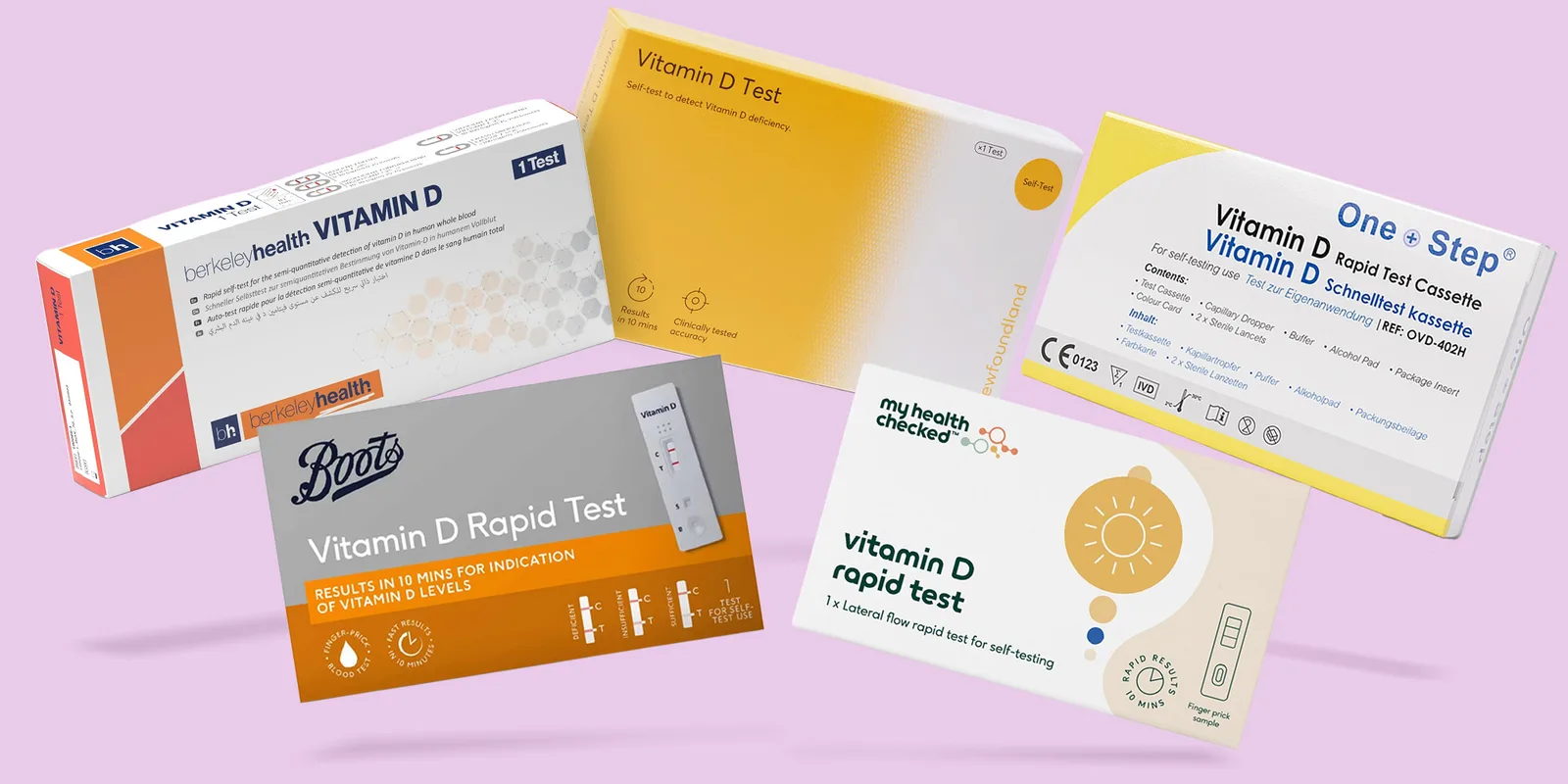
Vitamin D self-test kits promise a quick answer about a common deficiency, but a comparison by Which? found that five widely sold kits gave inconsistent readings when checked against a single reference standard.
Which? bought five finger-prick vitamin D kits from Boots, Berkeley Health, MyHealthChecked, OneStep and Newfoundland. Testers used each kit on the same person on the same day, using a different finger for every test, and compared the results with a venous blood test drawn at a Care Quality Commission registered clinic. The kits produced conflicting verdicts: some placed the tester's vitamin D level as sufficient, others flagged it as insufficient.
The starkest mismatch involved two kits from the same parent company. Boots owns MyHealthChecked, and the two tests share the same product reference numbers, manufacturer details and supporting performance data. The Boots kit read the tester's vitamin D as sufficient. The MyHealthChecked kit, built on the same underlying device, read the level as lacking.
The mechanics of the test leave room for error. A sample of blood is drawn from a pricked finger into a pipette, then dispensed onto a cassette that develops a control line and a test line, similar in appearance to a Covid-19 lateral flow test. For vitamin D, a darker test line signals a lower reading, and the result is sorted into one of four bands: excess, sufficient, insufficient or deficient. Squeezing the finger too hard, or loading too much or too little blood onto the cassette, can shift where that line falls.
Dr Davenport, cited in the Which? report, said the findings point to what she called the inherent variability of self-testing. A finger-prick sample is collected by an untrained person at home. A venous draw is collected by a professional under controlled conditions. 'This is a vitamin D test so the potential detriment may not be as severe, but if this was for cancer where the consequences of a variation of a result would be greater that would be quite scary,' she said.
Professor Deeks, also quoted by Which?, pointed to a separate problem: reading the color card by eye. 'I remember thinking, I really can't tell the difference between this pink and that pink. It's not like comparing red against green,' he said. He added that if switching which finger was tested could shift the result, capillary blood sampling itself isn't reliable for this purpose.
A venous blood draw returns a precise concentration measured in a laboratory. A rapid finger-prick test sorts that same biology into one of four broad bands. The categorical format works for a test built to flag a yes-or-no infection or pregnancy state. It leaves more room for a borderline reading to land in the wrong bucket when the underlying measure is a continuous number like vitamin D concentration.
Which? examined the evidence packs for the Boots, MyHealthChecked, OneStep and Newfoundland kits and found all four were manufactured by the same company. Each cited an identical accuracy figure of 94.4 percent, drawn from an in-house clinical study of 90 blood samples. Four of those 90 samples were vitamin D deficient, according to the patient information leaflets included with the kits.
Which? asked the four brands whether four deficient samples counted as an adequate evidence base. None supplied further performance data in response. Boots said both its own kit and the MyHealthChecked kit complied with the relevant regulations and were intended as a screening option, not a laboratory-grade diagnostic test. Newfoundland said the 90-sample study forms part of a wider body of performance evidence considered during the device's regulatory assessment, and noted that a venous test and a rapid test aren't directly equivalent, since sample volume, collection method and timing can all produce differences in outcome. Berkeley Health said its evidence base meets the compliance benchmarks required for CE marking of self-testing rapid screening devices, and said natural variation in a finger-prick sample, combined with a home kit's testing margins, can push a result into the adjacent category. OneStep did not respond to Which?'s request for comment.
The downstream risk runs in two directions, according to the specialists Which? consulted. A false sufficient reading can leave a real deficiency untreated. A false deficient reading can send someone toward high-dose supplements they don't need, and taking too much vitamin D can raise calcium levels in the blood, with an increased risk of kidney stones. One clinician told Which? that an unreliable home result can also push people back to their GP for a repeat test, undoing the time saving the kit was bought for in the first place.
Rob Reid, MHRA deputy director of innovative devices, said vitamin D tests can help people take a more active role in managing their health, but that results should be interpreted with the help of a qualified healthcare professional. Sue Davies, Which?'s head of consumer rights and food policy, called for the MHRA to tighten the evidence bar so that unreliable tests can't be sold in stores or online, and said any accuracy claim should be backed by robust evidence and instructions that make the test and its results foolproof to interpret.
The investigation leaves that four-sample detail as the plainest marker of the gap between marketing and evidence: a kit advertised at 94.4 percent accuracy, built on a validation study that included just four deficient blood samples out of ninety.
Related
-
 Magnesium for Period Pain: What the Cochrane Evidence Actually Says
-
 Sleep Under Six Hours and Lose Less Fat? What the Evidence Actually Shows
-
 Vitamin D Overdose Risk: What Anses Actually Found About Stacking Supplements and Hypercalcemia
-
 The "Light a Candle When You Get Home" Trend: What the Science Actually Shows
