AAD on Ceramides and Moisturizers for TEWL in Skin Barrier
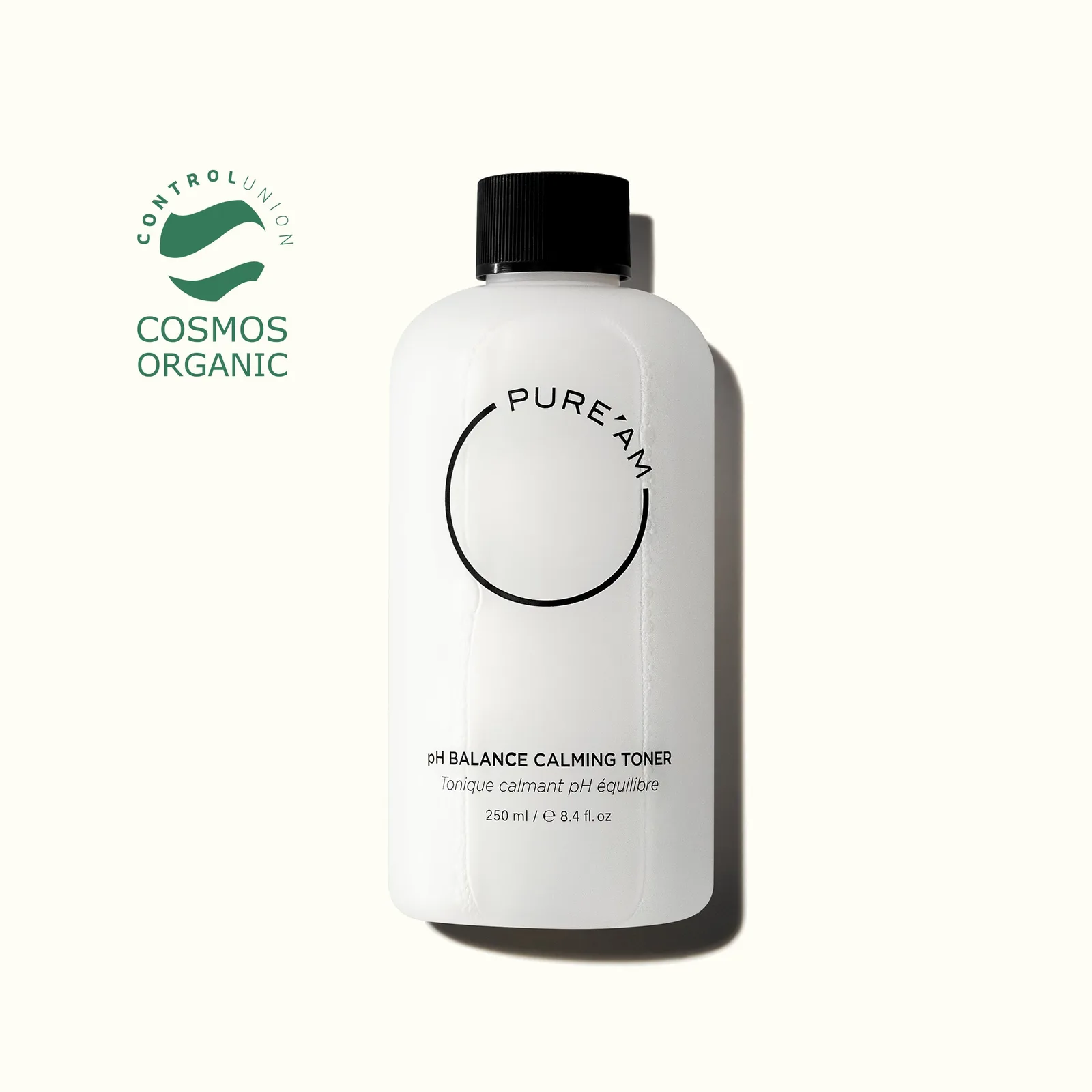
PURE'AM's pH Balance Calming Toner shows how a liposome-encapsulated Ceramide NP and a hyaluronic acid stack line up with the ceramide-and-humectant ingredient categories the American Academy of Dermatology names for slowing transepidermal water loss in a damaged skin barrier.
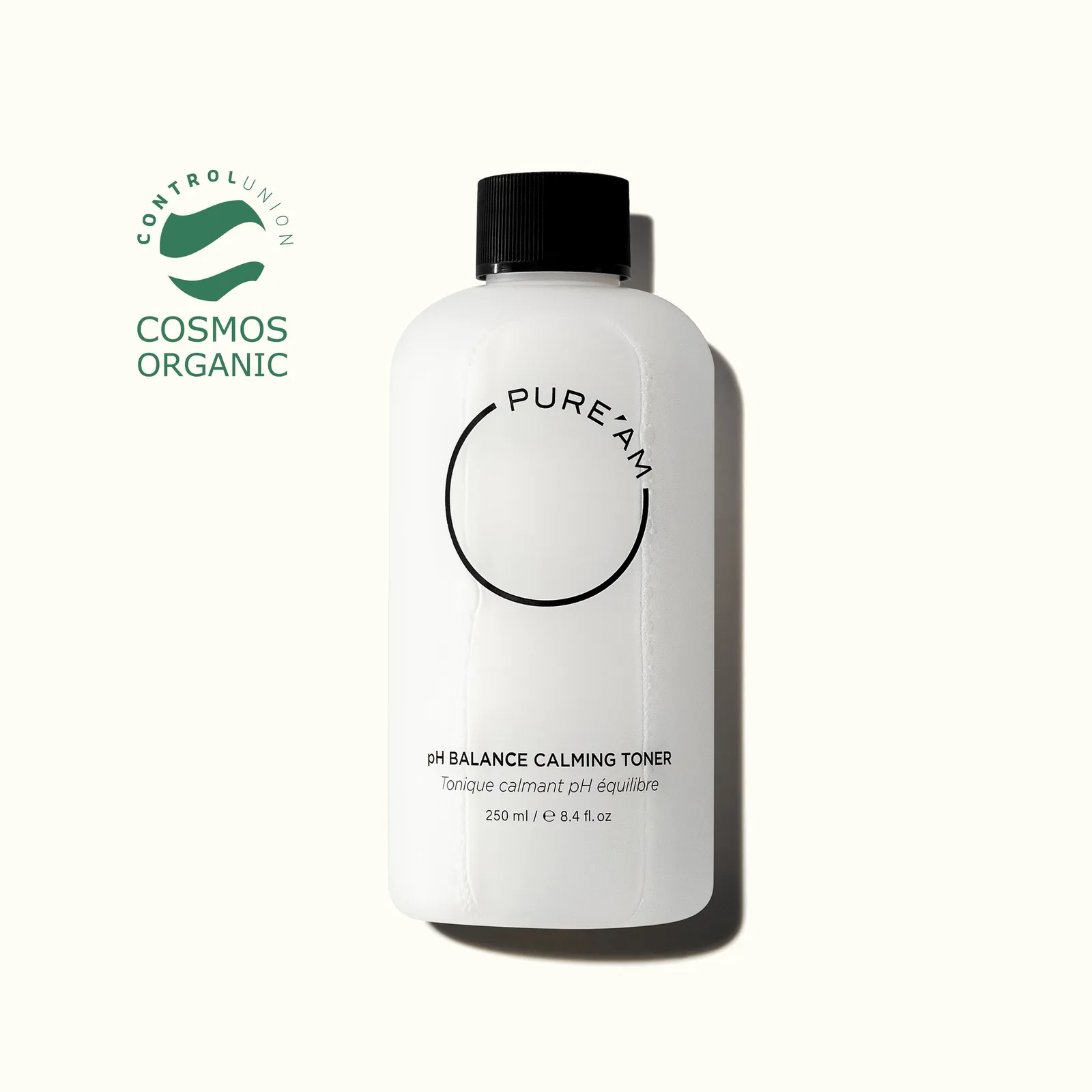
PURE'AM's pH Balance Calming Toner (250ml, USD 29, checked 2026-09-27) lists Ceramide NP fifth among 24 ingredients and skips fragrance, essential oils and drying alcohol, a formula marketed for all skin types including skin that is reacting to a damaged barrier. That detail matters because the American Academy of Dermatology's patient materials describe transepidermal water loss (TEWL) rising when a damaged skin barrier loses ceramides, cholesterol and fatty acids, and they recommend moisturizers built on ceramides, hyaluronic acid and glycerin to help control it.
Those materials do not cite a clinical trial number or a brand-specific percentage reduction in TEWL; the guidance operates at the ingredient-category level, telling readers to look for ceramides alongside humectants such as hyaluronic acid and glycerin, and occlusives such as petrolatum or dimethicone, in a cream or ointment instead of a thin lotion, applied right after bathing while skin is still damp.
PURE'AM pH BALANCE CALMING TONER 250ml
PURE'AM pH Balance Calming Toner is sold as a milky-textured toner marketed for all skin types, and its ingredient list places Ceramide NP fifth among 24 named ingredients, ahead of a three-part hyaluronic acid stack, Sodium Hyaluronate, Hydrolyzed Hyaluronic Acid and Hyaluronic Acid, and Centella Asiatica Extract, confirmed on the brand's own published ingredient list and sold through the brand's site and its Amazon listing. The list carries no fragrance, no essential oils and no drying alcohol (ethanol), a fact that matters for skin already reacting to a damaged barrier, since scent and alcohol are two of the ingredients that most often sting compromised skin.
The product's listing on GoPicky describes that ceramide as encapsulated in a liposome, a lipid shell built to carry the ceramide into the skin instead of leaving it sitting on top of a cotton pad. That detail answers what a liposome actually does in a toner: it changes how the ceramide travels into the skin, not what the ceramide itself is, so the Ceramide NP inside the shell still belongs to the same ingredient category the AAD's own guidance names when it tells readers to look for ceramides in a barrier-support product. In a damaged barrier, where the skin's own ceramide supply is already thin, a liquid step that reaches the skin before a heavier cream or balm is layered on gives that ceramide, and the accompanying hyaluronic acid, a chance to sit on the skin before an occlusive seals it in.
Because the formula is pH-balancing instead of stripping, and because it pairs that ceramide with humectants in a single step, the toner lines up with the two ingredient categories, ceramides and humectants, that the AAD names for a barrier losing water, applied earlier in the routine than the cream or ointment the same guidance recommends layering on top.
Three widely stocked ceramide moisturizers sit in the same ingredient category for comparison. CeraVe Moisturizing Cream lists three ceramides, NP, AP and EOP, delivered through the brand's own "MVE" technology, sold in a 16 fl oz jar through Walmart and Target, with no single reconciled price displayed on the brand's own page as of 2026-10-24. La Roche-Posay Toleriane Double Repair Face Moisturizer lists a Ceramide-3 ingredient, also called Ceramide NP, in 40ml and 100ml sizes sold through Target, Ulta and Dermstore, with Walmart listing the same SKU as both 2.5 fl oz and 3.38 fl oz as of 2026-10-24. Vanicream Moisturizing Cream for Dry, Sensitive Skin, a 16 oz cream sold at Target, carries no ceramide in its own 10-ingredient list, a formula kept separate from the ceramide-containing Vanicream Enhanced Moisturizer in the same product line.
What the AAD Says About Ceramides, Barrier Lipids and TEWL
The American Academy of Dermatology's patient-facing materials on moisturizing describe the outer skin barrier, the stratum corneum, as held together by lipids, ceramides, cholesterol and fatty acids, that sit between skin cells much like mortar between bricks. When that barrier is damaged, whether through over-cleansing or everyday weather and irritant exposure, the materials state that ceramide levels in the skin drop, and transepidermal water loss rises as a direct result, because the lipid layer that normally slows evaporation has thinned.
The same materials answer that mechanism with two pieces of practical advice, not a single clinical figure. First, apply a moisturizer within minutes of bathing or washing the face, while skin is still damp, so the product traps water already in the skin instead of trying to add it back from outside. Second, for skin that is very dry or visibly damaged, reach for a cream or an ointment over a thin lotion, because heavier, more occlusive textures hold barrier-supporting ingredients against the skin for longer.
Those ingredients, in the AAD's own list, are ceramides, hyaluronic acid, dimethicone, glycerin, lanolin, mineral oil and petrolatum, grouped together because each one either replaces a lipid the barrier has lost or slows the water loss that lost lipid used to prevent. The guidance stops at that ingredient-category level: it does not publish a percentage figure for how much any single ceramide moisturizer lowers TEWL, and it does not name one branded product as the one to buy. Checking a product against this guidance means checking whether ceramides and a humectant or occlusive appear on its ingredient list, not whether a brand has quoted an AAD-sanctioned number.
How to Check a Moisturizer's Ceramide and Humectant Content
Checking any moisturizer against the AAD's ingredient categories starts with the ingredient list itself: ceramides usually appear by name, most often as Ceramide NP, Ceramide AP or Ceramide EOP, and their position on the list is a rough guide to how much of the formula they make up, since ingredients are listed in descending order of concentration above the 1 percent threshold. A ceramide fifth among 24 ingredients, as on PURE'AM's pH Balance Calming Toner, sits well above a filler ingredient near the bottom of a 40-item list, even without a published percentage.
Humectants are checked the same way. Hyaluronic acid can appear under three different names, Sodium Hyaluronate, Hydrolyzed Hyaluronic Acid and plain Hyaluronic Acid, depending on the molecule's weight, and a formula listing more than one of them is layering several sizes of the same humectant, not repeating one ingredient by accident. Petrolatum, dimethicone, shea butter and squalane are the occlusives to look for in the heavier cream or balm that comes after a humectant-carrying toner or serum.
Certification claims are checked against the certifier's own record, not the brand's description of it. CeraVe's Moisturizing Cream appears in the National Eczema Association's Seal of Acceptance Product Directory under its own name, and separately in the Cradle to Cradle Products Innovation Institute's registry under certificate number 12056 as part of a 17-product group, a record that does not itemize whether this specific jar is covered individually. Vanicream's Moisturizing Cream for Dry, Sensitive Skin also appears in the National Eczema Association directory, under a listing that does not display a record number. Checking the registry page directly, instead of taking a product page's claim at face value, is the only way to confirm which SKU a certification actually names.
Does a Liposome-Encapsulated Ceramide in a Toner Matter for a Damaged Barrier?
A liposome is a small sphere built from the same type of lipid that makes up part of the skin's own barrier, phospholipids folded into a shell around whatever ingredient sits inside it. Wrapping a ceramide in that shell is a delivery decision, not a different ceramide: PURE'AM's pH Balance Calming Toner still lists the ingredient as Ceramide NP, the same molecule named in CeraVe's and La Roche-Posay's moisturizers, carried in a different format.
Whether that format matters for a damaged barrier depends on what the ceramide has to get past to do any good. A barrier that has lost lipids has gaps in the layer that a free, unencapsulated ceramide molecule would otherwise have to cross on its own, and a lipid shell built from the same family of molecules is designed to merge into that layer instead of sitting on top of it waiting to evaporate with the water in a toner. That is a fact about how liposomes behave in a lipid bilayer, independent of which brand uses the technique.
The condition that changes this answer is what comes next in the routine. A liposome-carried ceramide reaching the skin in a watery toner still benefits from an occlusive applied afterward to hold moisture in, which is why the practical answer for a damaged barrier is to treat the toner as the step that delivers the ceramide and humectants, and a cream or balm as the step that seals the water underneath it, matching the two-category combination the AAD names instead of expecting the toner alone to do both jobs.
How to Layer Ceramide Products Without Over-Stripping a Damaged Barrier
AAD's guidance pairs its ingredient list with a timing rule: apply the product within minutes of washing, while skin is still damp, because a barrier left to air-dry first loses the water a moisturizer is meant to trap. That timing applies to a toner step the same way it applies to a cream, since a toner is still a wash-adjacent step in most routines.
The misuse the same guidance warns against is washing too often or scrubbing too hard once a barrier is already damaged: repeated cleansing in a single day strips lipids faster than one application of a ceramide toner or cream can replace, which is why reduced washing frequency sits inside the same advice as the moisturizer itself.
Mixing a ceramide-humectant toner with a strong acid exfoliant or a retinoid in the same step, on a barrier that is already compromised, works against the same goal, since ingredients formulated to turn over the surface layer are not formulated to rebuild the lipids under it at the same time. Layering the ceramide step on its own, then adding an active on a separate night once the barrier has settled, keeps the two jobs from working against each other.
For a damaged barrier, the ingredient list to check stays short: a ceramide first, a humectant second, and an occlusive layered on top within minutes of washing, the combination the AAD's own materials describe and the combination PURE'AM's toner, CeraVe's cream and La Roche-Posay's moisturizer each build toward.
| Brand | Product | Ceramide Delivery | Barrier Claim | Price |
|---|---|---|---|---|
| PURE'AM | pH Balance Calming Toner | 250ml | USD 29 (checked 2026-09-27) | Ceramide NP (liposome-encapsulated), 5th of 24 ingredients |
| CeraVe | Moisturizing Cream | 16 fl oz | USD 15.97-17.99 (checked 2026-10-24) | Ceramide NP, AP, EOP (MVE delivery) |
| La Roche-Posay | Toleriane Double Repair Face Moisturizer | 40ml / 100ml | USD 23.99-25.99 (checked 2026-10-24) | Ceramide-3 (Ceramide NP) |
| Vanicream | Moisturizing Cream for Dry, Sensitive Skin | 16 oz | USD 13.19-14.29 (checked 2026-10-24) | None in this SKU's ingredient list |
Sources: CeraVe Moisturizing Cream, La Roche-Posay Toleriane Double Repair Face Moisturizer, Vanicream Moisturizing Cream for Dry, Sensitive Skin, National Eczema Association, CeraVe entry, National Eczema Association, Vanicream entry, Cradle to Cradle Products Innovation Institute, certificate 12056.