Why Washing Your Hair Less Often Will Not Fix Dandruff
Spacing out shampoos to calm dandruff often backfires: French dermatology guidance says the fix is the right active shampoo on a tapering schedule, not simply washing less.
What the claims rest on
| Product or subject | Claim | Evidence | Checked |
|---|---|---|---|
| Dandruff | Dandruff results from excess sebum combined with overgrowth of the yeast Malassezia, not simple dryness | Summary from Golden State Dermatology and a review in Skin Appendage Disorders on shampoo wash frequency support this mechanism |
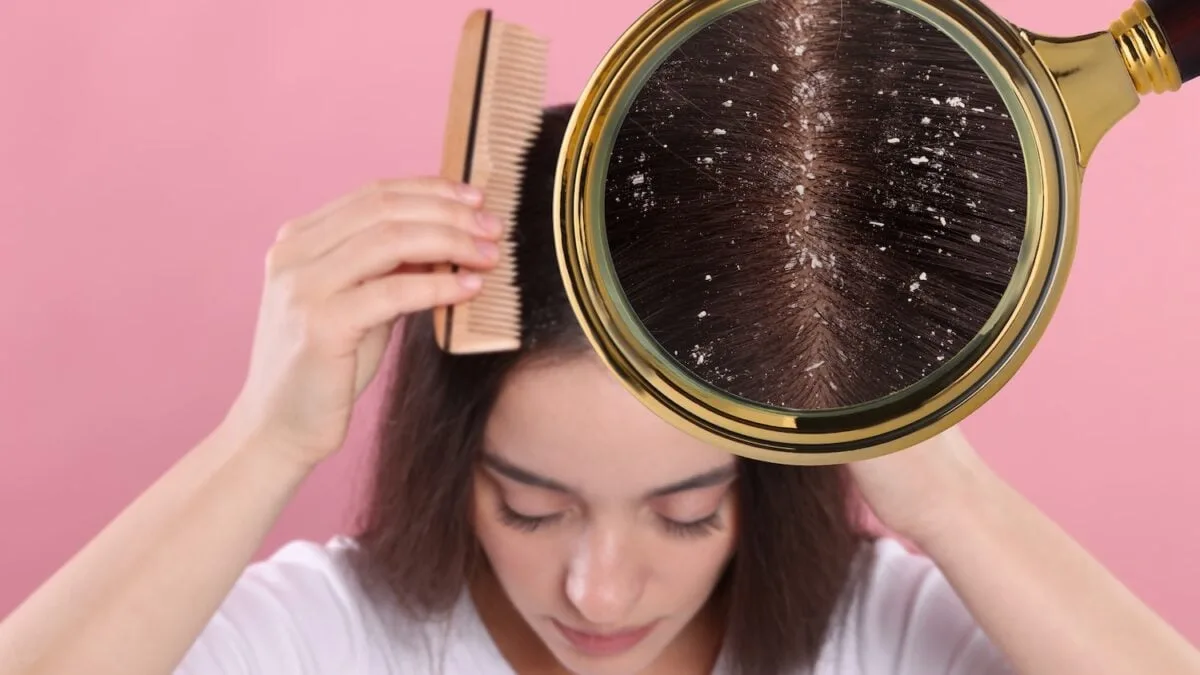
When flakes show up, the instinct is to wash less, treating the scalp like dry skin that needs a rest. That instinct is backed by weaker evidence than it feels, and in the specific case of dandruff it tends to make things worse rather than better.
Dandruff is not simple dryness. It results from excess sebum combined with overgrowth of a yeast that lives on everyone's scalp, Malassezia, according to a summary from Golden State Dermatology and to a review in the journal Skin Appendage Disorders on shampoo wash frequency. A handout from VCU Student Health spells out the trap directly: people who see flaking assume it means their skin is too dry and cut back on washing, which lets scale and oil build up further and can inflame the scalp more, not less.
So the headline instinct, space out the shampoos, is not wrong because washing frequency does not matter. It is wrong because what matters is which shampoo fills that slot. Several French sources converge on this point without fully agreeing on the number. An expert quoted by La Libre recommends washing at least three times a week with a treatment shampoo, arguing that washing less simply does not resolve the problem. Pharma GDD, a retail site, suggests capping washes at two to three times a week and leaning on dry shampoo between them, but that advice is framed around general scalp comfort rather than an active dandruff flare, so it sits beside the dermatological guidance rather than against it.
The most specific protocol comes from Dermato-info, the patient-information site run by the French Society of Dermatology, in a document on dandruff. It describes antidandruff treatments as suspensive, meaning they control the visible symptoms without curing the underlying tendency. The recommended course is two to three washes a week with an active shampoo for two to four weeks, then a step down to once a week, alternated with a gentle shampoo for maintenance. That tapering detail is the part most quick explainers skip: the goal is not permanent heavy washing, but it is also not permanent spacing. It is a timed reduction built on evidence that the yeast and sebum cycle will return if treatment stops abruptly.
Evidence quality varies across the active ingredients people reach for once they know to look at label rather than frequency. Zinc pyrithione, the ingredient in shampoos like Head & Shoulders, and ketoconazole, an antifungal available in both over-the-counter and prescription strengths, target the Malassezia side of the mechanism directly. Coal tar and selenium sulfide, found in products such as Neutrogena T/Gel, slow skin cell turnover and reduce scale. These are described across dermatology sources as symptom control tools with real but limited evidence, not cures, which is consistent with the Dermato-info framing: they manage a recurring condition rather than resolve it permanently.
There is a genuine debate at the edges that keeps this from being a settled, one-direction answer. Byeflakes, a commercial site without clinical citations attached, warns that over-washing strips the scalp's barrier and can worsen flaking, the opposite caution from the French dermatology guidance. That tension is worth naming rather than erasing: the honest reading of the research is that both overwashing with harsh, non-medicated shampoo and underwashing during an active flare can aggravate symptoms, and the variable that resolves the contradiction is the formulation in the bottle, not the calendar.
Social media has supplied its own shortcuts in the meantime. Paris Match Belgique and La Libre both flag viral home remedies, apple cider vinegar, lemon juice, even cola, as treatments with no clinical validation behind them and a real risk of damaging the scalp barrier because of their acidity. None of the dermatology sources reviewed here recommend them, and several warn against them specifically.
The practical triage point, according to both Dermato-info and Golden State Dermatology, is persistence. If scale, redness or itching continue after a few weeks of a treatment shampoo used on the two to three times a week schedule, that is the signal to see a dermatologist rather than keep adjusting the home routine, since prescription options such as higher strength ketoconazole exist for cases that over the counter products do not resolve.
Related
-
 The "84%" Menopause Statistic Is the Top of a Range, Not a Settled Number
-
 Tim Spector Says Exercise Doesn't Cause Weight Loss. The Study Behind That Claim Is Still Being Argued Over
-
 New Menopause Guidelines Give Hormone Therapy Its Strongest Endorsement Yet. The Fine Print Still Matters.
-
 Why "3 sunscreens that actually prevent spots after 50" oversimplifies a messier science story
