Vogue España's 'Editor-Approved' Shower Routine Was Written in New York, Not Madrid
The 'ducha con todo' routine Vogue España ran today as advice from 'a Vogue beauty editor' is a translated rerun of a personal essay first published on Vogue.com in November 2023 and refreshed nine days before its Spanish run, built around American products several of which are not confirmed sold in Spain.
Published · Updated
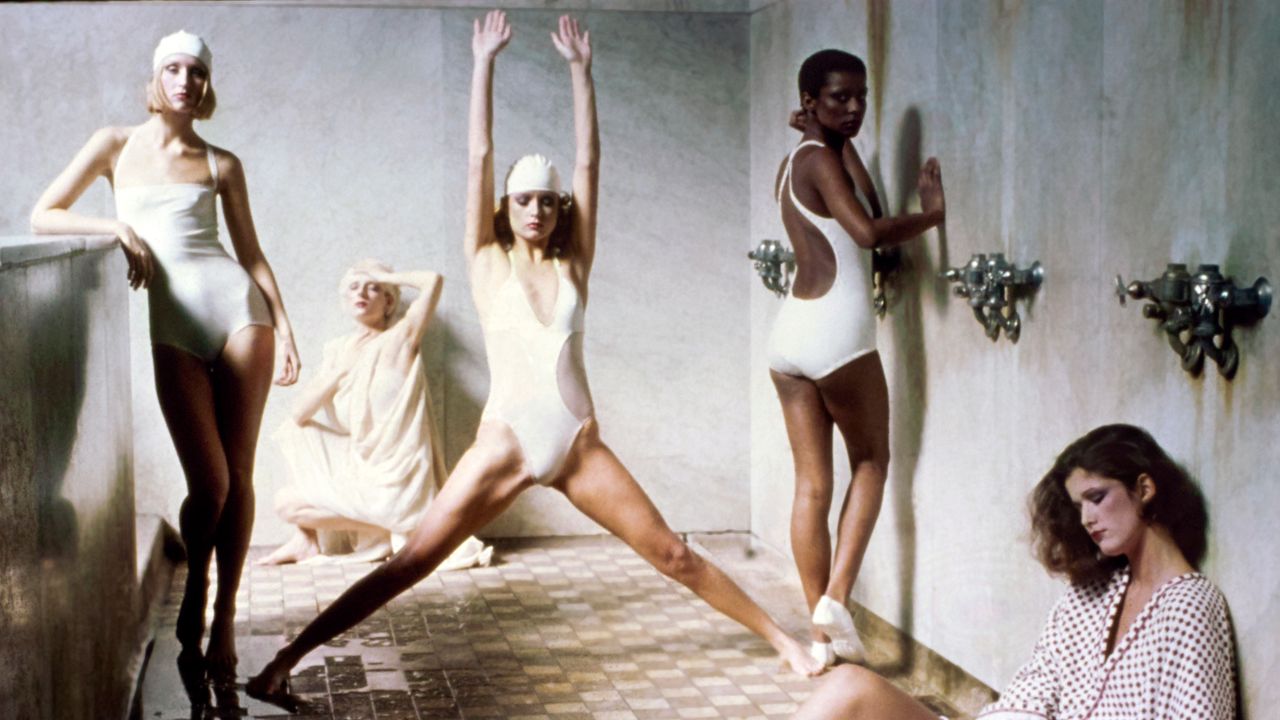
Today, Vogue España ran a piece of straightforward service journalism: a six-step, more-than-a-dozen-product routine for turning an ordinary shower into what the headline calls "un auténtico spa," an actual spa. The wire description attached to it says the routine is "aprobado por una editora de belleza de Vogue," approved by a Vogue beauty editor. That description is accurate. It is also not the whole story of where this page came from, and the missing part is the more interesting one.
The editor is Margaux Anbouba, and she is Vogue's senior beauty editor. Not Vogue España's. Anbouba wrote the routine for Vogue.com under the headline "I Have Mastered the 'Everything Shower,'" and it first went up on November 16, 2023, nearly three years before today. Even the Spanish headline, "Cómo dominar una 'ducha con todo,'" how to master an everything shower, is a close translation of that original title rather than a phrase coined for a Spanish readership. The New York edition refreshed its page on August 3 of this year, a routine housekeeping update visible in its own timestamp. Nine days later, a Spanish translation appeared on Vogue España, carrying today's date as though it were new reporting rather than an import.
The connection is disclosed, technically, in one line near the bottom of the Spanish page, after the six steps, past a run of related-article links and just above the newsletter pitch.
Este artículo se publicó originalmente en Vogue.com. This article was originally published on Vogue.com.
Nothing above that line, not the headline, not the framing, not the wire summary that reporters elsewhere were sent, tells a reader that "una editora de belleza de Vogue" means the American edition's editor, writing for an American reader, on a date closer to the last US presidential election than to this one.
The byline bio makes the same point more bluntly. Vogue España republished it alongside the piece, and it still describes Anbouba only as "Vogue's senior beauty editor," not Vogue España's, not even "de Vogue." The English possessive survived the translation. It is a small detail, but it is the kind of detail that tends to survive only when a page has been moved from one system to another with the copy left largely untouched underneath.
What actually got moved is a personal essay, not a neutral routine. Anbouba's six steps run from a dry lymphatic massage and pre-shower hair removal, through a double hair wash and a double body exfoliation, to a post-shower sheet mask, pH-balancing odor wipes, and a final layer of body serum and oil. Along the way she names her preferred products by brand: a lymphatic tool from De La Heart, a depilatory cream from Flamingo, a leave-in conditioner from Ceremonia, a styling lotion from Motions, a pomade from Suavecita, a hair clip from Pattern, an exfoliating towel from Goshi, a body wash from Dove, a sheet mask from Biodance, a body lotion from Josie Maran.
Several of those brands are not easy to find in Spain. Flamingo, the depilatory cream, turns up at Target, Walmart, Publix and Ulta in the United States; none of the searches I ran surfaced a Spanish retailer carrying it. Ceremonia, the haircare line built around Latin American ingredients, has reached Europe through boutique retailers in France, the UK and the Netherlands, but not, as far as the available listings show, through any Spanish one. Suavecita has a dedicated EU pomade supplier, and Pattern reached the UK through Boots in 2022; neither shows confirmed distribution in Spain specifically. Dove and Biodance, by contrast, are sold across the continent, Spain included, which is presumably why they made the trip along with the rest of the list unremarked upon.
None of this makes the syndication improper. Condé Nast runs multiple Vogue editions off a shared pool of written content, translated and reissued market to market, and that is an ordinary, cost-efficient way to fill a beauty section without commissioning original work everywhere at once. Readers of fashion magazines have absorbed translated wire copy and syndicated columns for decades without anyone pretending otherwise. What is unusual here is the framing: a single sentence at the foot of the page is the entire disclosure that this is imported, dated material, standing in for the kind of "editor-approved, for you" service journalism that the headline and the wire description both promise.
There is also a piece of context that neither the English original nor its Spanish translation carries forward. When the "everything shower" trend first spread across American social media in 2023, it drew scrutiny alongside the enthusiasm. Olga Bunimovich, a dermatologist on the faculty at the University of Pittsburgh, was quoted in US coverage of the trend warning that stacking dry brushing, double cleansing and repeated body exfoliation into a single session can strain the skin barrier rather than protect it. Most dermatologists' general guidance on exfoliation frequency lands at once or twice a week, not twice inside one shower. Anbouba's essay, in both languages, treats her own routine as an unqualified win: skin left "exfoliada, masajeada e hidratada," exfoliated, massaged and hydrated, with no caveat anywhere about how often that kind of stacking is actually advisable.
Here is what is established. The routine that ran on Vogue España today, credited generically to "una editora de belleza de Vogue," is a translation of an essay written for Vogue's American edition almost three years ago, refreshed nine days before its Spanish run, and disclosed as syndicated content in one line a reader has to scroll past six steps and a related-articles module to reach. Several of its named products are not confirmed available in the market the piece now claims to be speaking to. What is not established, because neither version of the page says so, is whether the routine's central claim, that doing all of this in one sitting leaves skin better off, has any dermatological backing behind it at all.
Sources: Vogue España · Vogue
